Industrial Laser Marking Systems / Laser Markers
Aluminium Laser Marking & Engraving Solutions
-
Tags:
- Laser Marking , Laser Engraving , Metal
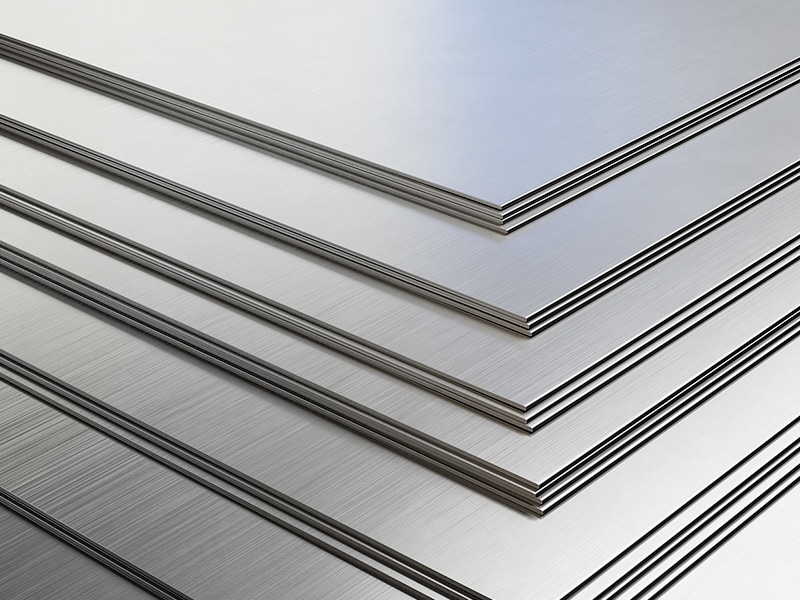
Aluminium is everywhere, from car parts and electronics to aerospace components and consumer goods. According to Alcoa, an industry leader in aluminium products, global demand for this metal rose to 69.2 million tons in 2022 alone.
Widespread use comes from its unique combination of being lightweight and exceptionally strong. Because of those properties, it is ideal for a variety of industries. Whether for identification, branding, or traceability, laser marking aluminium can provide whatever type of marks are required.
But as aluminium's use continues to grow, so does the need for reliable marking and engraving solutions.
What is Aluminium Laser Marking & Engraving?
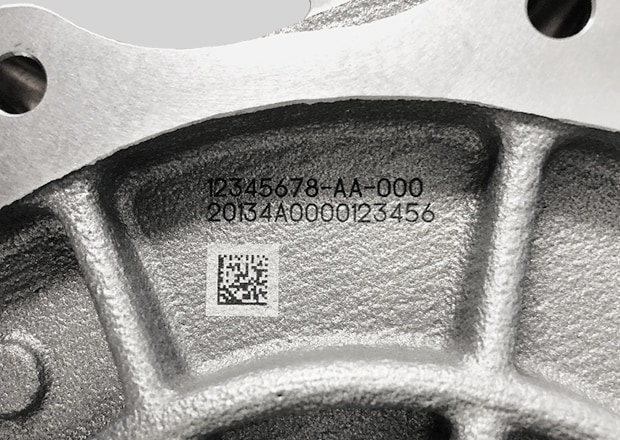
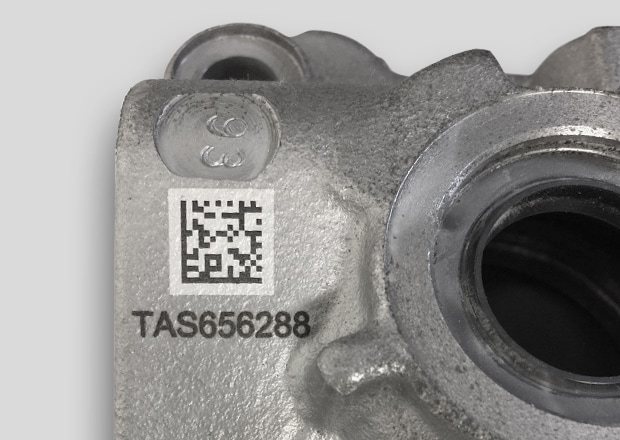
Aluminium laser marking and engraving involve using focused laser beams to create permanent marks on the metal’s surface. Lasers either vaporise or alter the aluminium’s top layer, resulting in highly visible, durable markings. Marks range from serial numbers and logos to detailed designs and barcodes, depending on the application. Unlike traditional methods that involve physical contact, laser engraving aluminium is a non-contact process, ensuring the metal’s integrity while producing clean, legible marks that last.
Aluminium's surface is altered by a laser. Sharp, high-contrast marks are created without cutting into the material itself. When engraving, the laser goes deeper, removing layers to create a more pronounced and permanent design.
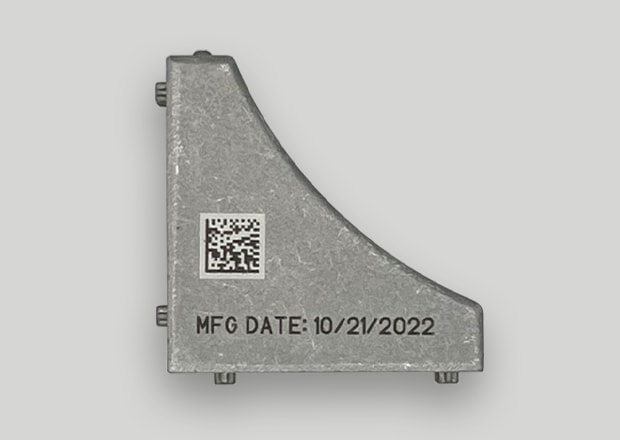
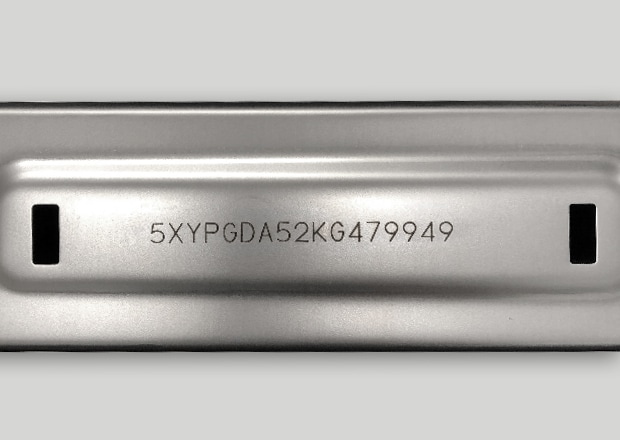
Why Use Laser Technology for Aluminium Marking & Engraving?
Laser engraving aluminium is the go-to method for several reasons. For one, it provides very accurate results. Whether marking small components or larger aluminium sheets, the laser’s precision ensures each mark is consistent and clear, no matter how detailed the design. Many industries (like aerospace, automotive, and electronics) rely on this for quality and safety purposes. The slightest imperfections can lead to safety or other issues.
Because laser marking aluminium is a non-contact process, the metal remains undamaged throughout. Mechanical methods can sometimes leave scratches or dents, but laser technology avoids this risk altogether. Oftentimes, maintaining the aluminium's structural integrity is necessary, such as in aircraft or automotive components. Another reason to use laser systems is they offer speed without sacrificing quality. It especially works well in high-volume production environments.
Applications of Aluminium Laser Marking & Engraving
As mentioned, laser marking aluminium has a broad range of applications. In manufacturing, it’s used to add identification codes, serial numbers, and part details that must remain visible throughout the product’s lifespan. Marks need to withstand tough working conditions, like high temperatures or exposure to chemicals. Laser marking systems ensure the markings remain readable no matter what.
Aerospace manufacturers count on laser marking aluminium for labelling important components. Accurate and sturdy markings are necessary, as these parts must meet strict regulations and be easily tracked.
Consumer electronics commonly use aluminium engraving for branding and product identification. Whether it's a logo on a laptop or a serial number inside a smartphone, laser engraving aluminium provides high-quality, professional-looking results.
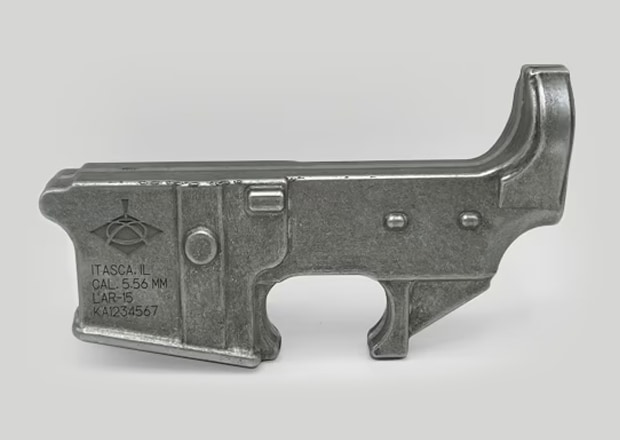
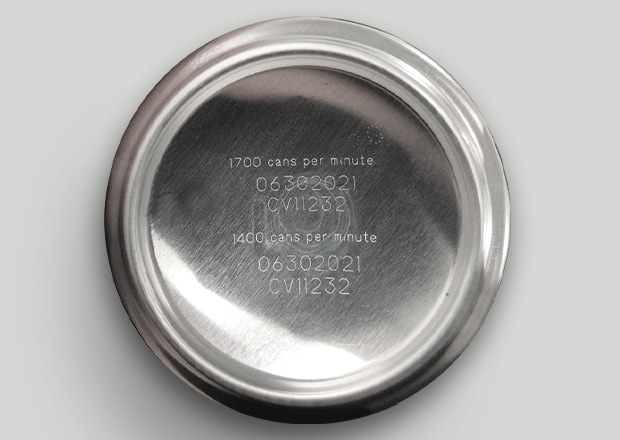
How KEYENCE Laser Marking Systems Work for Aluminium Marking & Engraving
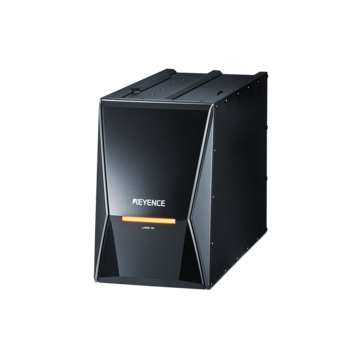
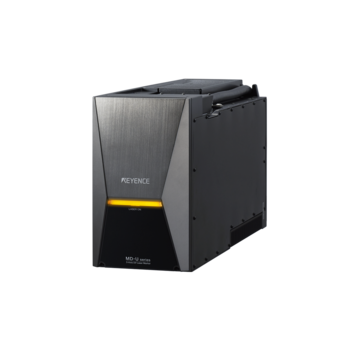
KEYENCE laser marking systems provide a reliable solution for marking and engraving aluminium. Using advanced 3-axis laser technology, they control the laser beam's movement across three dimensions—X (horizontal), Y (vertical), and Z (depth). Various surfaces, including those with curves or uneven shapes, can be easily marked with precision, which is not the case for conventional lasers.
When marking or engraving aluminium, the KEYENCE system directs a laser beam onto the metal’s surface, either vaporising a thin layer or penetrating deeper, depending on the application. KEYENCE’s 3-axis UV laser marker, and 3-axis hybrid laser marker are designed to handle different types of aluminium, whether anodised or raw.
Our systems simplify the process of aluminium marking. Are you ready to achieve reliable, detailed results on your aluminium products? Contact us today to get started.
Aluminium Laser Engraving: All You Need to Know
Aluminium engraves cleanly but behaves differently by alloy and surface—anodised layers give the highest contrast, while bare Aluminium may need tuned parameters.
- Aluminium alloys (e.g., 6061, 5052, 7075) engrave readily, but bare aluminium can produce slightly lower contrast than anodised surfaces; anodised layers yield crisp, high-contrast marks with minimal material removal.
- Use pulsed 1064 nm fibre/hybrid sources with adjustable pulse width to balance contrast and speed; shorter pulses limit melt and halo on thin parts or heat sensitive assemblies.
- For regulated parts, verify Data Matrix or QR codes to ISO/IEC 29158 (AIM DPM) and apply UDI (medical) or MIL STD 130 (defence) where required. Integrated vision and mark and read workflows help maintain code grades in production.
Aluminium Marking: Laser Engraving Machine for Aluminium
Machine selection starts with the application. Serial numbers or 2D codes are common for tracking purposes, but logos can also be marked.
Key machine features:
- MOPA pulse control for contrast on anodised and burr free etching on bare aluminium
- 3 Axis dynamic focus to keep spot size consistent on curved enclosures and multi level parts
- Embedded vision for autofocus, alignment, and in line code grading without external cameras
Process tips:
- Use high frequency/low energy for crisp marks on anodised
- Increase pulse energy and optimise hatch for durable etch on bare aluminium
- Maintain adequate fume extraction at the marking point to prevent redeposition that dulls contrast
QR Code Laser Engraving: Ultimate Guide & Tips
Engraving QR Codes on metal and plastics is straightforward if you follow the standards and control a few key variables pointed out below:
- Standards: QR Codes follow ISO/IEC 18004. For direct part marks, verify per ISO/IEC 29158 (AIM DPM). GS1 and UDI formats are common in medical devices; UID applies in defence.
- Process control: use consistent pulse energy and orthogonal hatching; validate with in line grading. 3 Axis autofocus and integrated vision help place codes on curved or height varying surfaces and maintain grades over long runs.

FAQs
How Does a Laser Marking Machine Work?
A pulsed laser delivers energy to a small spot, causing colour change (anneal), surface etch, or material removal. Galvo mirrors steer the beam, optics set marking field and beam spot size, and vision and autofocus keep marks aligned and in focus on real parts.
Can You Engrave Metal?
Yes. Pulsed 1064 nm fibre or hybrid lasers engrave common metals (aluminium, stainless steel, titanium). Power, pulse width, and scan speed are tuned to achieve black marks, light etching, or deep engraving.
Why Is the Fibre Laser Engraver So Popular?
Fibre lasers combine high absorption on metals, fast galvo scanning, and low maintenance. Adjustable pulse control supports both high-contrast marking and deep engraving, and 3 Axis/dynamic focus options maintain quality on complex geometries compared with a conventional laser marker.