
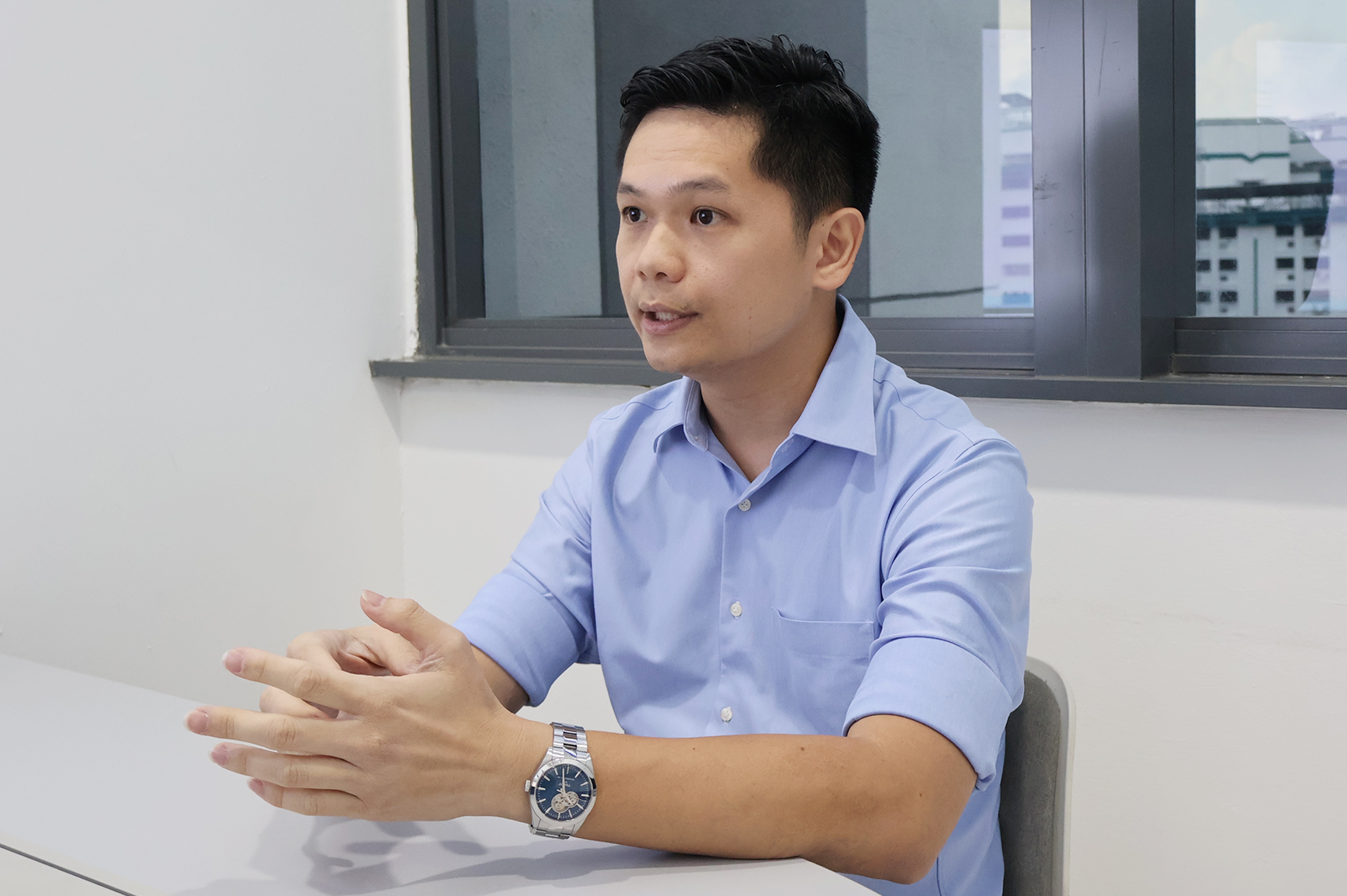
WEinnovate is a Singapore-based provider of advanced automation solutions serving high-precision sectors including medical devices, semiconductors, aerospace, and precision engineering. Founded in 2020 by two engineer-programmers, the company has grown to a team of around 26 to 30 people on the strength of fast proposals and responsive after-sales support. When a medical device customer asked WEinnovate to automate the back end of its packaging line — including 100% verification of every printed label — the company built the inspection around the KEYENCE XG-X Series vision system.
Summary of this case
- WEinnovate is a Singapore automation machine builder serving medical device, semiconductor, aerospace and precision engineering manufacturers.
- A medical device customer needed 100% verification of every printed label — every OCR character, barcode and symbol, plus print alignment and critical dimensions — under ISO standards.
- One vision supplier declined after more than three weeks and another had no local support team, so WEinnovate chose KEYENCE, which delivered a proposal within one week.
- A KEYENCE verification template on the XG-X Series uses variables and subtraction, so it verifies running serial numbers that change on every label.
- In testing, full label inspection takes just over 1 second, inside the end customer's 2-second-per-capture requirement.
- The end customer's own staff can adjust acceptance thresholds through the controller, so labels that still pass the ISO standard are not over-rejected.
ChallengeWhy Is 100% Label Verification So Demanding in Medical Device Packaging?
WEinnovate's medical device customer originally wanted to automate its entire assembly and packaging process. WEinnovate advised starting with an achievable first phase — case packing, case erecting, and palletizing — so the customer could experience automation within budget. Installing the machine allows the customer to save roughly three to five operators per line, with those operators redeployed to assist the automation.
The demanding part was the label, for two reasons: it had to be verified in full without rejecting labels that still meet the ISO standard, and the data to verify it against was out of the machine builder’s reach.
"What is 100% verification? Every OCR, every barcode line. However big the label is, you have to verify from the first 0.5 mm to the end of the label. Yet it must not compromise the passing rate — a slight deviation that still passes the ISO standard should be accepted."
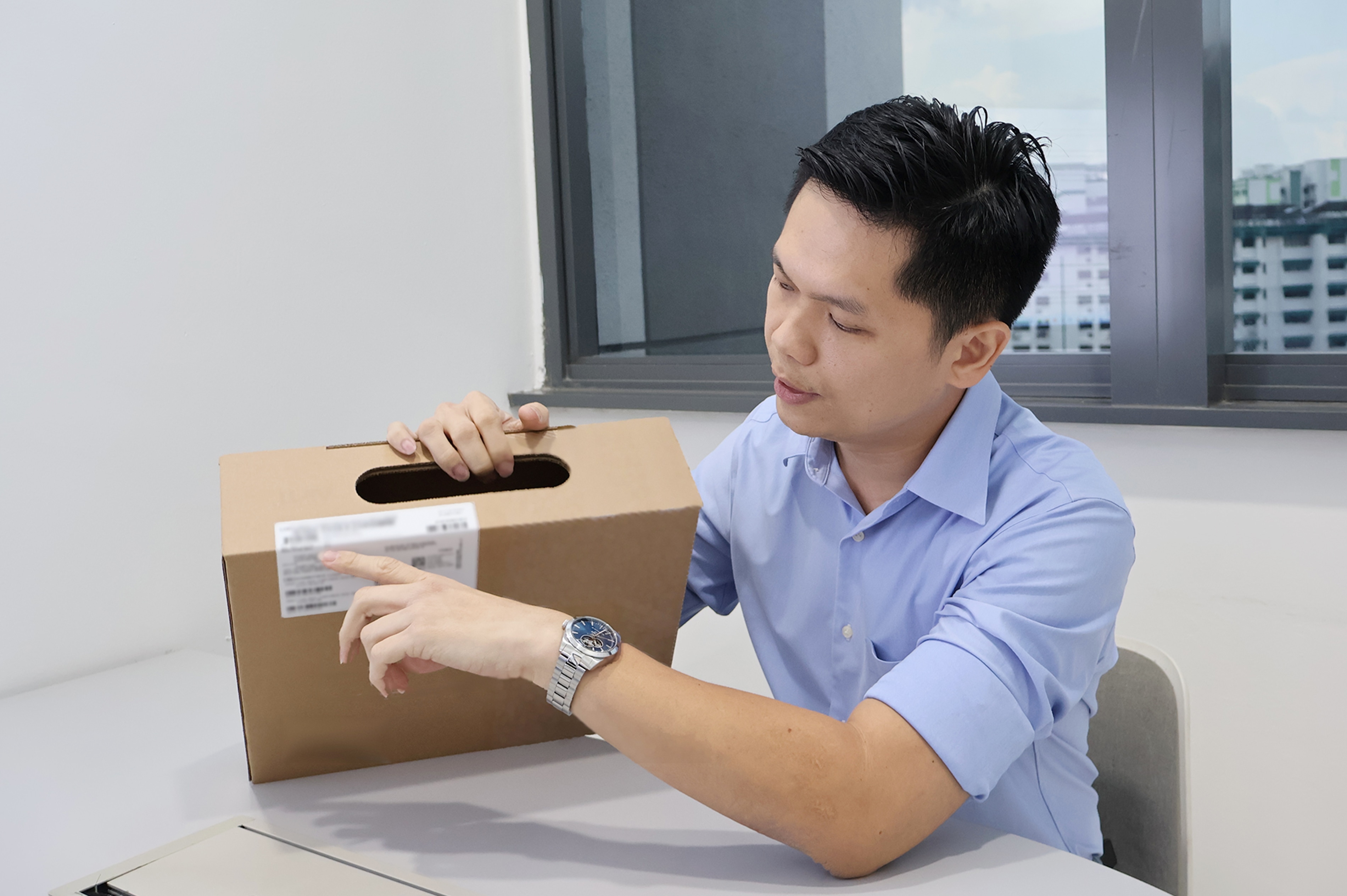
The second came from data integration. The customer's printer is driven by its MES through an eDHR-based process, with no input or output the machine builder could access directly — and without input data, even the most capable inspection system cannot verify that the printed content is correct. The team also knew that inspection had to handle running serial numbers that change with every single label. WEinnovate’s own R&D team solved this by building a secure communication link to the customer’s eDHR data, so the machine has the expected content to check each label against.
SelectionWhy Did WEinnovate Choose the KEYENCE XG-X Series Vision System?
KEYENCE answered fastest, had a local support team in Singapore, and could show that a very similar label inspection had already been done.
WEinnovate first approached other vision suppliers. One major supplier took more than three weeks before finally answering that it could not help, given the many variations in the label inspection criteria. Another could technically support the task but responded more slowly and had no local support team in Singapore — a decisive drawback for a machine builder whose own reputation is built on fast response.
A PC-based vision architecture was also ruled out. Windows and graphics card updates force recurring software patches — maintenance work the customer refused to carry for equipment expected to run for years. The embedded controller architecture of the KEYENCE vision system avoids that burden.
"For KEYENCE, we got the proposal within one week. And KEYENCE came back with very good news: the team in Japan had experience with this kind of project and could instantly show us the video. It was quite fascinating — we shared that video with our customer to show that KEYENCE could do what they wanted."
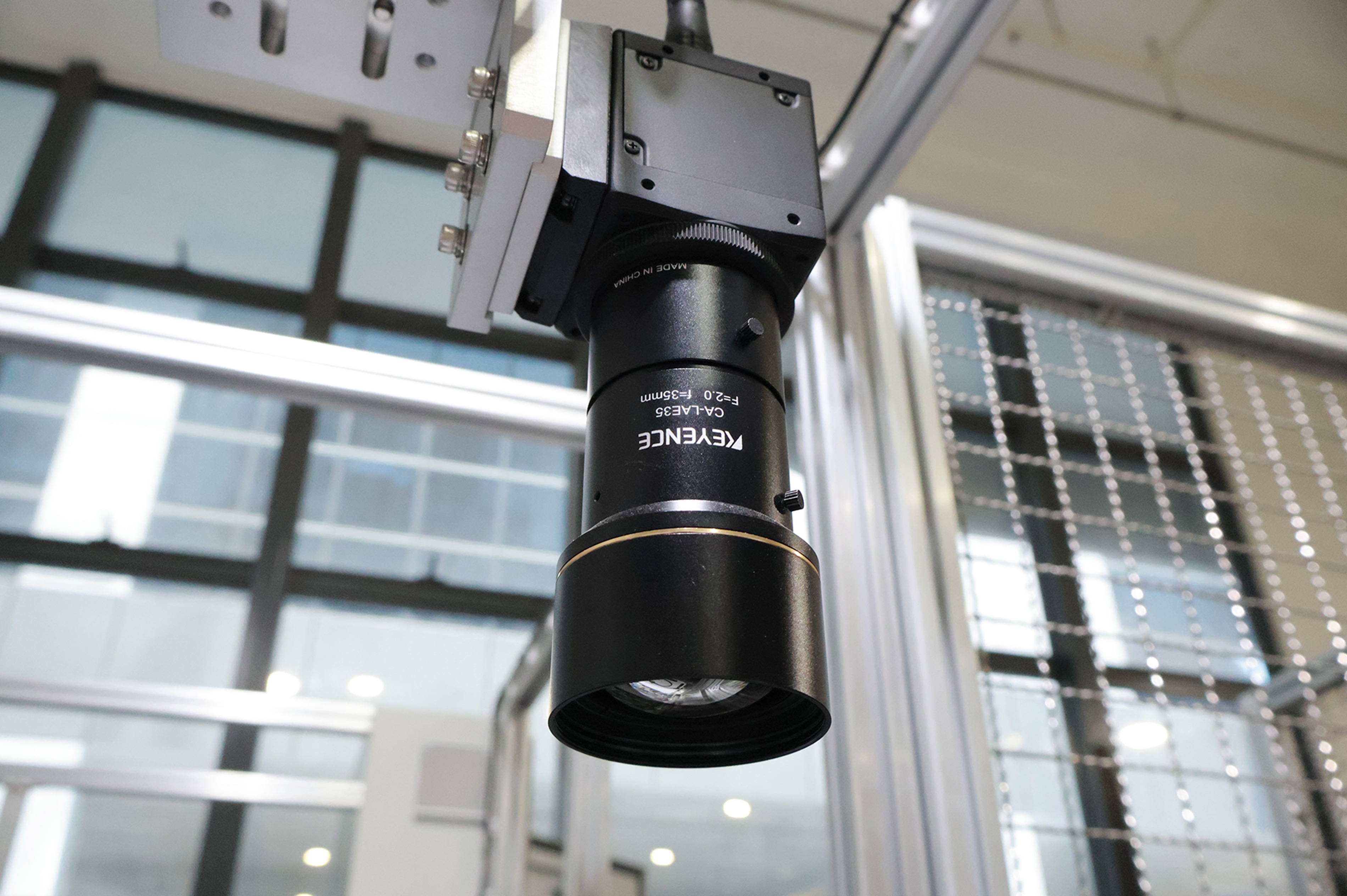
The demonstration capability sealed the decision. For a recent project, KEYENCE brought a complete demo kit to WEinnovate's office within two days and produced a full test report and proposal in about four days. The ability to adjust acceptance thresholds per symbol — so that deviations that still pass the ISO standard are not over-rejected — matched exactly what the end customer required.
ResultsWhat Did the XG-X Series Deliver on the Machine?
Full verification of every label, running serial numbers included, in just over 1 second per capture in testing — inside the end customer’s 2-second requirement.
A fixed-function label checker was never going to be enough. Every field on the label had to be verified against expected data, and some of that data changes with every unit — running serial numbers combining letters and digits. What WEinnovate needed was a vision platform it could program around the application, not one it had to design the application around.
The XG-X Series gave it that. KEYENCE built a special verification template using variables and subtraction technology, so the same template verifies fixed content and changing content alike — subtraction works even on the running numbers.
The inline label inspection systems the team had evaluated elsewhere could compare a barcode against its OCR text, but could not perform presence/absence checks, full 100% verification, or verification of running serial numbers combining letters and digits.
"The flexibility to build the template with variables and subtraction is what did it — it even handles the running serial numbers, and we're consistently coming in under our two-second requirement."
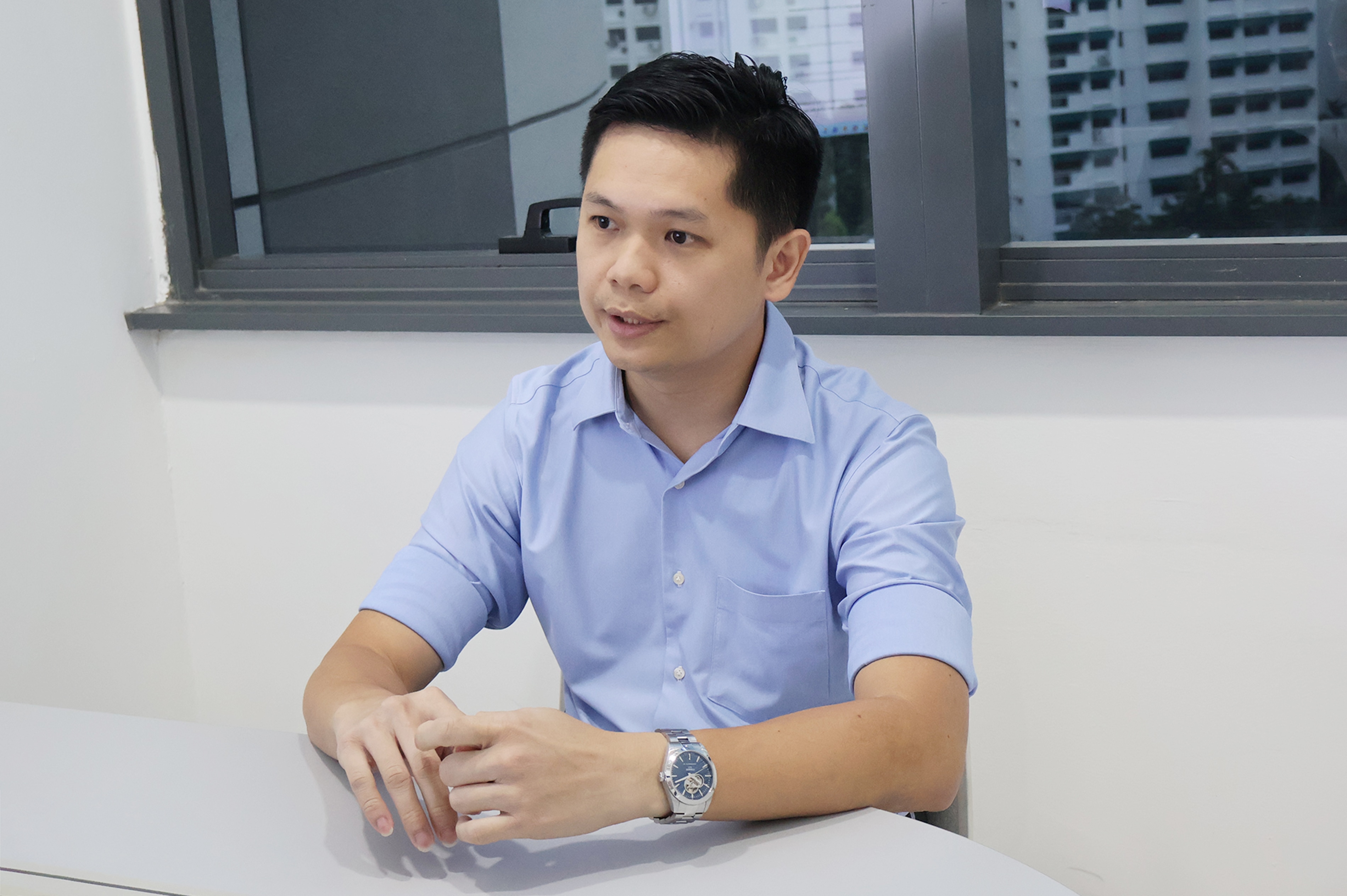
The end customer, whose team had been looking for a viable label inspection solution for some three years, saw the machine and responded positively — particularly to how easily acceptance thresholds can be changed by their own staff through the user-friendly controller interface.
WEinnovate also values the way KEYENCE's local software team works around the realities of machine building: taking images from the XG-X Series machine vision system as it comes together and preparing inspection templates offline, so everything is ready to try out the moment the hardware is complete.
OutlookWhat Comes Next for WEinnovate and Vision Inspection?
Repeat deployments of the label inspection machine are already planned, and demand for vision inspection keeps growing across WEinnovate's markets: new wafer formats in semiconductors are creating fresh inspection requirements, and medical device manufacturers in the region face heavy labeling requirements and workforce quotas, both of which accelerate automation every year.
WEinnovate's advice to fellow machine builders facing complex vision applications: help the customer understand the inspection system and the challenges arising from their product and their lighting environment, and show the pros and cons of each solution honestly. "As long as we can solve the customer's issue and leave them satisfied, that's the most important thing."
Frequently Asked Questions
QWhy did WEinnovate choose the KEYENCE XG-X Series Vision System for medical device label inspection?
A
KEYENCE delivered a proposal within one week, immediately shared a video of a very similar label inspection application handled by its team in Japan, and provides local technical support in Singapore. Other vision suppliers either declined the application or could not offer comparable local support and responsiveness.
QWhat does 100% label verification mean on WEinnovate's machine with the XG-X Series?
A
Every label is fully inspected: every OCR character, barcode, and symbol is verified, together with print alignment and critical dimensions, from one end of the label to the other. Even running serial numbers combining letters and digits are verified — a capability the team could not obtain with other inline inspection solutions.
QHow fast is label inspection with the KEYENCE XG-X Series on this machine?
A
Just over 1 second per label in testing so far, comfortably inside the end customer’s 2-second-per-capture requirement. In that time the XG-X Series completes full label inspection — every OCR character, barcode, symbol, alignment, and dimension check.
QHow does the KEYENCE XG-X Series vision system verify labels with changing serial numbers?
A
Through template flexibility. The XG-X Series let KEYENCE build a special verification template using variables and subtraction technology, so every field on the label is checked against expected data rather than against a fixed master image — including running serial numbers that combine letters and digits. The inline label inspection systems WEinnovate had evaluated elsewhere could not do that.
QWhy did WEinnovate avoid a PC-based vision system and prefer the KEYENCE embedded controller?
A
To avoid ongoing software maintenance. PC-based vision systems depend on operating system and graphics card updates, which force software patches and create ongoing maintenance work. The customer wanted equipment that runs for years without that burden, which the KEYENCE embedded vision controller architecture provides.